


Responsibility: When authority alone is not enough
29. Sep 2026
Whoever is in charge of a particular issue should also be able to move it forward. It sounds obvious, but in day-to-day work, it’s not always that simple.
Reading time: 3 minutes
Clear lines of authority alone are not enough to ensure that responsibility can actually be assumed. Perhaps the necessary knowledge is lacking, or perhaps an important decision cannot be made independently. Or it may not even be clear what exactly falls within one’s area of responsibility.
At empiriecom, working independently is an integral part of how we collaborate. We want people to be able to work on their projects independently and make decisions on their own. However, for this to happen, certain conditions must be met.
Four dimensions of responsibility
One model we are examining considers four key aspects:
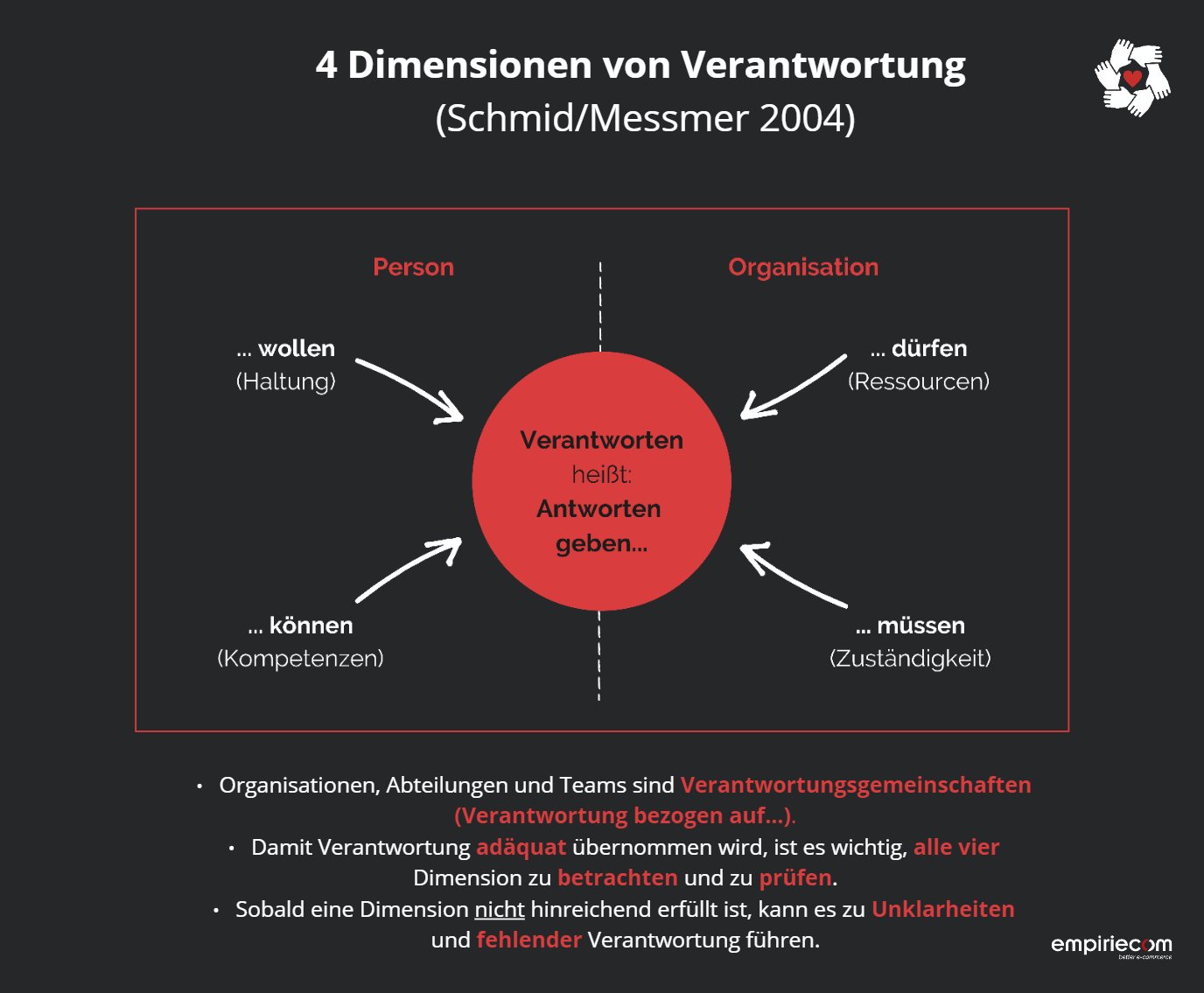
- Want – Do I want to take on this task?
- Ability – Do I have the necessary knowledge and skills?
- Permission – Can I make the decisions required to do this?
- Must – Does this task fall within my area of responsibility?
Only when these four elements come together can someone truly take charge of an issue.
Willingness also plays an important role here. Not everyone wants to take responsibility for every task, and not every task aligns with one’s own interests or strengths. That’s perfectly fine, as long as it’s handled openly.
This model changes the way we view situations where something isn’t working. It’s not always a lack of willingness. Sometimes one of the other prerequisites for taking action is missing.
And what about the others?
In everyday work, no one works entirely on their own. A decision often requires information from another department; one task builds on another; or, at some point, another person’s expertise is needed.
This is where the idea of complementary responsibility comes in.
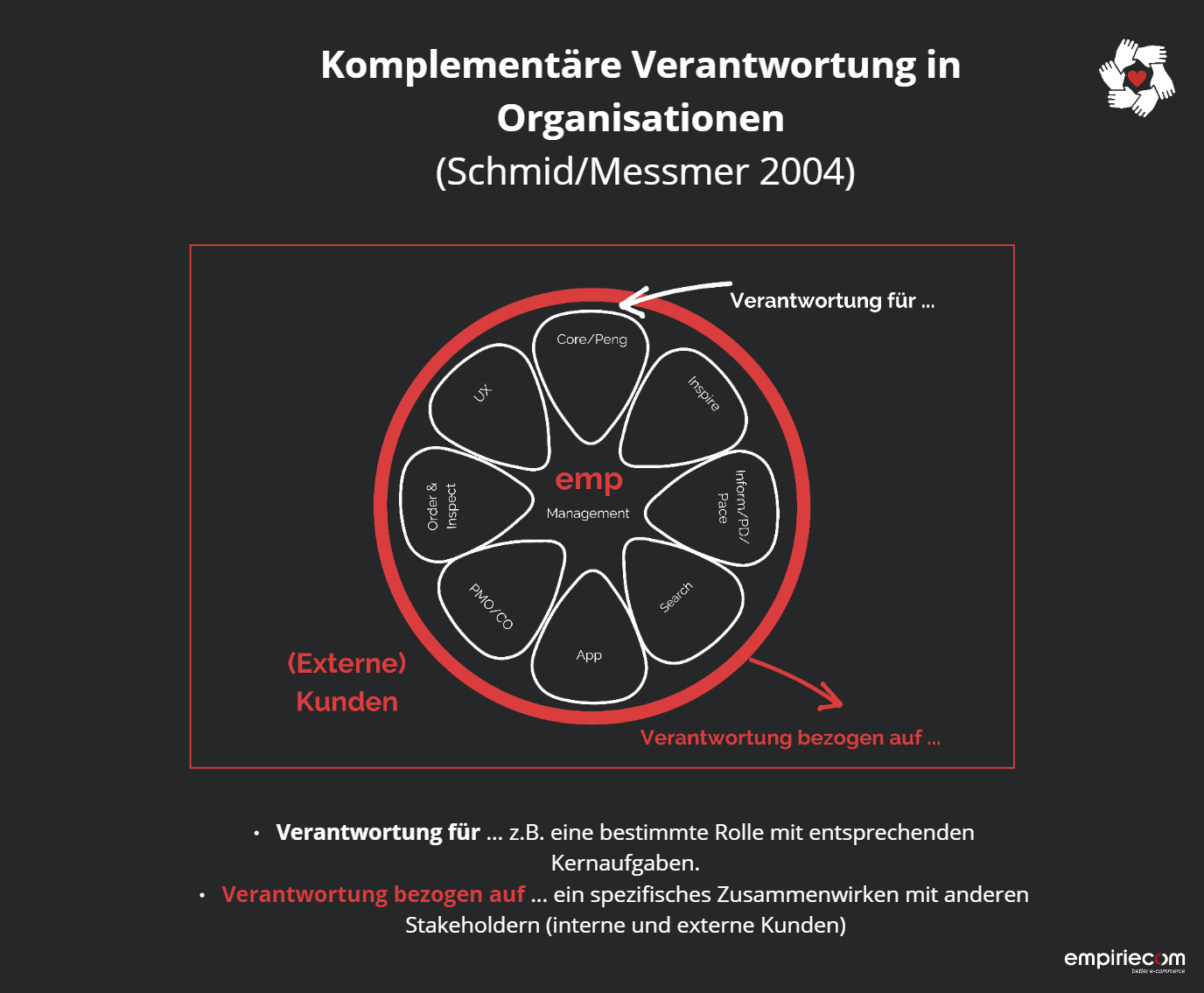
It focuses not only on one’s own area of responsibility, but also on the interfaces with others. Collaboration can play a role both internally with colleagues and externally with customers or other stakeholders. It is important to be clear about who contributes what and how the individual areas work together.
Working independently, therefore, does not mean having to solve everything on your own. It means knowing your own areas of overlap and recognizing when others need to be involved.
What this means for us at empiriecom
For us at empiriecom, these two things go hand in hand: taking responsibility and creating the framework that makes it possible.
That’s how a responsibility becomes something that actually works in everyday life.
After all, sometimes it’s not about taking on more responsibility, but about having the right conditions in place to be able to take it on.
